

The marginal cost of production is a concept in economics and managerial accounting that is commonly utilized by businesses to determine the optimal production level. Manufacturers frequently consider how much it would cost to add one additional unit to their manufacturing plan. According to economics, the marginal product is the change in output that occurs as a result of adding one more unit of relevant input. It is assumed that all other numbers and inputs remain constant while measuring the marginal product.
The benefit of creating one additional unit and receiving revenue from that item will lower the entire cost of producing the product line at a specific level of production. Finding that point or level as early as possible is crucial to lowering manufacturing costs. The marginal cost of production is an economic term that is useful in business management since it allows companies to optimize their production levels. It refers to the additional cost of manufacturing a new unit of production, such as a new product or providing a new service to clients. Although the notion can be applied to various sorts of enterprises, it is mostly associated with manufacturing businesses.

The marginal cost of production can assist firms in maximizing their output. Creating too much too soon can have a detrimental influence on profitability, while producing too little can result in subpar results. In general, a company's output levels will be optimal when its marginal cost of production equals its marginal revenue. The law of marginal product states that if the input to a business process is increased, the output will increase until a specific point is reached. Even if the input is increased to a certain point, the output remains constant, and beyond that point, the output begins to grow negative.
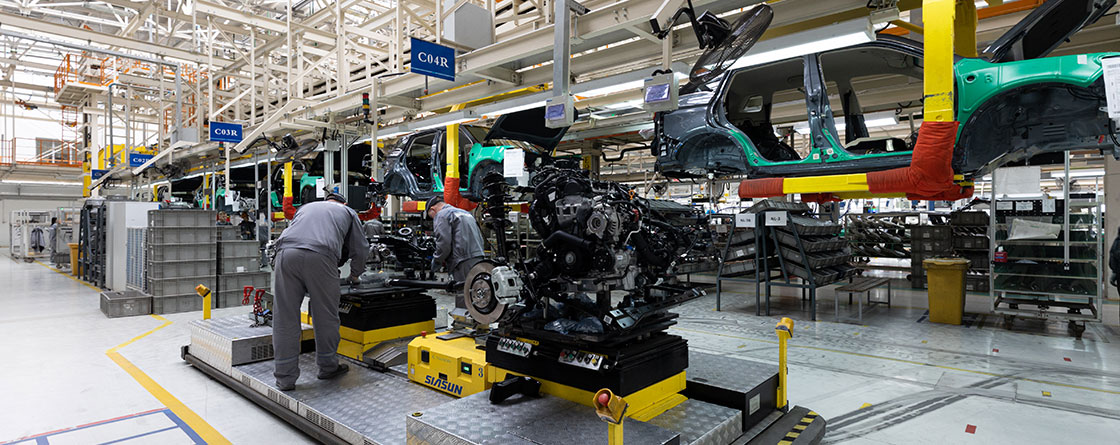
Looking at a car factory for example: Let us say a car factory requires 5 machineries to assemble a single car. The car passes through the flow and emerges as a single entity at the end. In a year, two employees may produce six cars. Now the business decides to enhance production and hires four more employees, bringing the total number of employees to six, with the expectation of a six-fold increase in car production. In theory, just over 20 cars should be produced in a year, but only nine are actually produced. The reason behind this is that, even if the number of employees is increased, the number of machineries used to manufacture cars remains constant. As a result, in order to boost productivity, the business should not only hire additional people, but also expand the machinery in the manufacturing plant.
Increased production aims to meet client demand and, as a result, enhance revenue. As a result, client demand has an impact on marginal product output. If there is a bigger demand for a product, it makes sense for businesses to recruit more people or buy more machines to produce it. As a business it is important that you aware when you reach the stage where marginal product drops because that clearly explains that you are no longer reaching your desired revenue and it is becoming costly to produce an additional unit. Dropping less important business activities, outsourcing some functions to outside companies that can perform those functions cheaper but better, redesigning internal business processes, consolidating underutilized production facilities, closing high-cost retail outlets, and pruning marginal products are all examples of cost reductions.
It's best to make tiny tweaks to one aspect of production at a time to ensure your company gets the maximum potential marginal product yield. It will be difficult to tell which of these elements had the most favorable impact on sales if you hire more people, buy more warehouse space, and invest more money in merchandise all at once.