
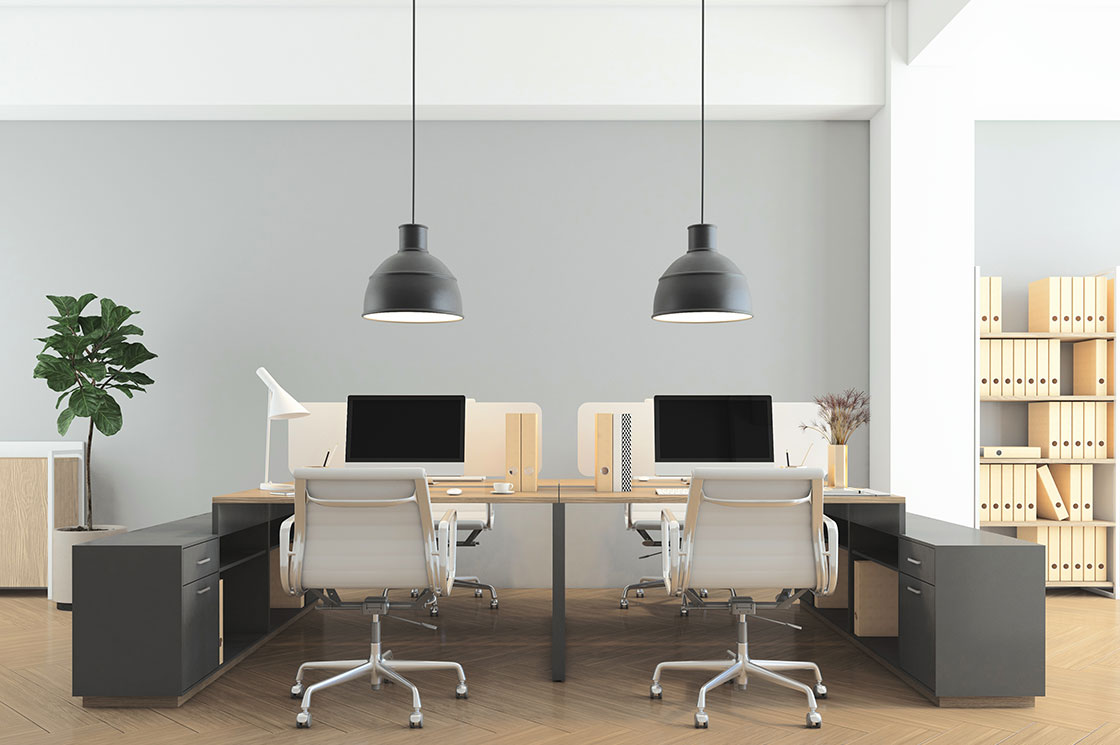
Many organisations are reopening their offices after more than 2 years of remote work caused by the COVID-19 outbreak, and workers have varied opinions about it. Some people enjoy the concept of collaborating with co-workers in person rather than using their children’s study table as an improvised home office. The workplace will continue to be an important aspect of company culture and play an important role in work and productivity in the long run.
Office space demand is tied to the economy; during a downturn, office demand falls as job levels fall and organisations go into cash-saving mode. Increasing working from home does not necessarily imply a reduction in need for office space. Density, financial returns, productivity, and technology are just a few of the aspects that must be considered. Before diving into these, it's important to pause to consider the office's role and purpose.
Offices provide a physical area for individuals to gather in order to coordinate activity, production, and performance, as well as to enhance creativity. They also serve as a showcase for a company's brand and culture, as well as a significant component in attracting and maintaining top staff. The office's function will continue to change, with rising trends emphasizing the importance of cooperation and innovation in boosting employee productivity. For employees, the office provides a space for face-to-face activities such as social engagement, mentoring, and management that technology struggles to simulate.

Whether you're going back to work full-time or just a few days a week, the disturbance to your regular routine might be stressful. You'll find yourself dealing with considerably more people than normal, and you'll most likely need to rearrange your schedule to fit your commute. In many circumstances, it will be more practical to utilize a phased-out approach, with some employees returning to the office right away while others — wait a little longer. How can you cope with the stress that this shift in your job brings?
- Restart by creating your support network at work, focusing on spending time with employees who are encouraging and get along with you.
- Stay on track with a healthy schedule that includes regular meals, consistent sleep patterns, appropriate physical activity, and downtime. Set aside regular breaks at work to de-stress and refresh yourself during your working hours."
- Get good sleep - Before reconciling with your employer and co-workers, you want to be your best, most rested self — and whether you have a lengthy commute or a lot to do at work, get the necessary rest. Your body and mind will thank you.
- Before returning to work, examine your thoughts for any expectations you may have, intentionally let them go, and create an open, receptive mindset. This will allow you to be more adaptable, flexible, and robust during the change and transition process. Change is not easy, especially when it disrupts a routine, so practice self-compassion and self-care.
- Set clear boundaries -This return to the workplace allows you to determine your own boundaries in terms of availability, communication, and working hours and locations.
Working from home has numerous advantages for employees, not the least of which being the elimination of the need to commute and the possibility of more flexible hours. However, for many people, working from home is a poor decision due to a lack of space, privacy, and/or additional distractions. Employees also miss the social connection that comes with working life. The Covid-19 epidemic was yet another unexpected extreme shock to our nation, with far-reaching short- and long-term implications. In the short term, as the pandemic's economic impact spreads to corporate activity, there will be an unavoidable correction. However, in the long run, the office will continue to be an important element of our corporate culture and play a vital role in our work and productivity.
It can take time to get used to activities you haven't done in a long time, such as coping with a long commute, traffic, in-office distractions, a chatty co-worker, or being in close proximity to others. It's understandable that a part of us would be cautious to do the activities we've been told are 'unsafe' for over two years. As your brain learns to respond to a new set of circumstances, you may have to persuade your brain's threat detecting system that it's' safe and ok. While returning to work might cause tension and worry, having coping mechanisms in place will help make the adjustment go more smoothly.