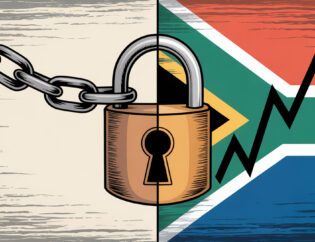
The Domino Effect: Exploring the short-term and Long-term impact of a decrease in the GDP
The term Gross Domestic Product (GDP) refers to the measuring of a country’s economic output. The term “output” means measuring the performance of a country’s economy. How the GDP is calculated is by taking the monetary worth of a country’s goods and services after a certain period of time, usually 1 year. The GDP represents economic production and growth which has a large impact on everyone within the economy. When the GDP growth is strong, firms hire more workers and can afford to pay higher salaries and wages, which leads to more spending by consumers on goods and services. Firms also have the confidence to invest more when economic growth is strong, and investment lays the foundation for economic growth in the future. When GDP growth is very low or the economy goes into a recession, the opposite applies (workers may be retrenched and or paid lower wages, and firms are reluctant to invest).
Africa’s most industrialized nation, South Africa, has been declared as a State of disaster as rolling blackouts imposed by Eskom transpire. Its GDP has declined by 1.3% after the energy crisis which has led to power cuts strangles the economy. Other factors include the finance and trade sectors which are also the biggest contributors to the economy’s decline. To combat the energy crisis, President Cyril Ramaphosa has appointed Kgosientsho Ramokgopa as electricity minister to tackle the crisis. The decline in South Africa’s GDP means it has been largely flat since the end of 2019, even as the country’s population has increased by 3.5%. The deadly riots that transpired in 2021 wrecked critical infrastructure in the country’s two most economically important provinces, Kwa-Zulu Natal and Gauteng. The country’s economic growth is not only affected by Eskom’s current challenges but by the Covid-19 pandemic, which amplified joblessness and poverty, in one of the world's most unequal countries. Economic growth slowed down for about 2 years. Expenditure on real GDP decreased by 1.3% in the fourth quarter of 2022.
The Domino Effect: Exploring the short-term and Long-term impact of a decrease in the GDP
The Domino Effect: Exploring the short-term and Long-term impact of a decrease in the GDP
The Domino Effect: Exploring the short-term and Long-term impact of a decrease in the GDP
With regards to expenditure on GDP,according to the StatsSA report, households spent 0.9% more on goods and services, which contributed 0.6% to the overall change in expenditure on GDP. Spending on the “other” category, restaurants and hotels, and furnishings, household equipment, and maintenance contributed positively to the increase, while spending on food, alcohol, and tobacco, transport, and recreation had a negative impact. The government’s final consumption expenditure decreased by 0.7%, while total gross fixed capital formation increased by 1.3%, mainly due to increases in transport and machinery equipment. The report also indicated that there was a R29 billion inventory build-up in three industries – mining and quarrying; manufacturing; and trade, catering, and accommodation. Net exports contributed negatively to GDP growth due to a decrease in exports of goods and services, mainly in base metals, mineral products, and paper.
How these sectors have been affected by the decline in the GDP are as follows:
- Finance, real estate and business services: According to the latest Stats SA report, the finance, real estate, and business services industry fared poorly in the last part of the year, as it went down by 2.3%. This made the GDP growth go down by 0.6%. Within this industry, activities like banking, insurance, and other related services like pension funding and auxiliary activities, also did not have much business going on.
- Trade, catering and accommodation industry: The trade, catering and accommodation industry decreased by 2.1% in the fourth quarter, contributing -0.3 of a percentage point to GDP growth, Stats SA said. Decreased economic activity was also reported for wholesale trade, catering and accommodation industries.
- Mining and quarrying: The report also revealed that the mining and quarrying industry went down by 3.2%. This decrease resulted in a negative impact of 0.1% on the GDP growth. The report stated that this could have resulted from the production of diamonds, iron ore, and platinum group metals (PGMs) going down.
- Agriculture, forestry and fishing: The agriculture, forestry and fishing industry decreased by 3.3% in the fourth quarter, contributing -0.1 of a percentage point to GDP growth. Decreased economic activities were reported for field crops and horticulture products.
- Manufacturing: The manufacturing industry went down by 0.9%. Out of the 10 manufacturing divisions, five reported a decrease in growth rates during this period. The food and beverages division played the biggest role in the decrease. The basic iron and steel, non-ferrous metal products, metal products, and machinery division also had a significant contribution to the decline in this industry.
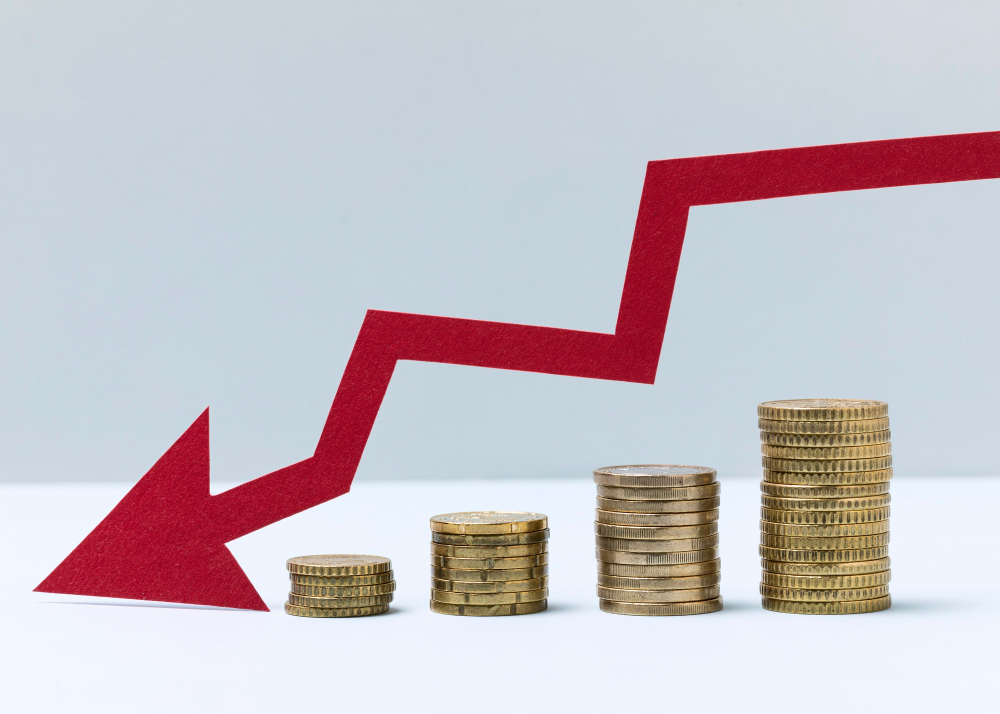
The 1.3% decline in South Africa’s GDP means that the value of all goods and services produced within the country’s boarder has affected its economy. When an economy’s GDP declines, it can have both short-term and long-term implications on the country and its citizens. The short-term implications of a decline in the GDP growth are often felt immediately. The implications are as follows:
- This decline in the GDP slows down economic activity, which can lead to a decline in employment and income. Household spending has increased by 0.9%. Although more was spent on food, alcohol and tobacco, transport and recreation, South Africans received less for their money. This contributed negatively to the slow GDP growth. The result is a vicious cycle of reduced economic activity that can lead to recession.
- One of the most important short-term effects of the decline in the GDP is unemployment. If companies are not making as much money, they may have to lay off workers or reduce their working hours. This leads to spending by people with lower incomes, which can further reduce economic activity.
- Another short-term effect is a decline in government sector revenues. Again, if companies are do not make much money, they can pay less taxes. Also, when people loose their jobs, they may need government assistance in the form of unemployment benefits or other social security programs. This therefore strains state budgets and lead to a reduction in the public sector.
The long-term implications of a decline in GDP growth are often more difficult to predict and can be more serious than the short-term implications. The implications are as follows:
- One of the most important long-term effects is the effect on economic growth. If economic activity is lower, it may be difficult for companies to invest in research and development or new technology which can limit future growth.
- Another long-term effect is on the country’s standard of living. When economic activity weakens, people may not be able to afford basic needs such as food, housing and health care. This can lead to the deterioration in the quality of life of citizens and also affects their health.
- A decline in international trade also has an effect in a country’s GDP growth. If a country’s economy is struggling, it becomes less attractive to foreign investors, which can lead to fewer exports and less foreign investment. Furthermore, if a country exports more than it imports, its economic value is also severely affected.
How Is (GDP) Calculated? there are three methods of calculating the figure: the production approach, the income approach, and the expenditure approach; and they should all in theory add up to the same number. The production approach is the sum total of market value of final goods and services produced in a country during 1 year. In comparison, the income approach simply adds the sum total of all incomes of all individuals living in a country during that same year. The most commonly used method however is the expenditure approach. With the expenditure approach, we calculate the sum of all consumption, investment, government spending, and net exports (exports minus imports).
An important question is,” will South Africa’s weak economy grow?” the country’s economic growth cannot be easily predicted because it is affected by multiple factors. The most important factor is with regards to politics.
Responding to South Africa’s budget, delivered by Finance Minister Enoch Godongwana last month, it seems like the failing electricity sector, with record levels of load-shedding, are likely to lead to lower growth this year and next than the government currently forecasts. In short, it can be said that the decrease in GDP can have significant short-term and long-term implications on the economy and the citizens of the country and the government and policy makers must act to address these issues and support economic growth to avoid a prolonged recession. A manner in which they can deal with this is to ensure that they work hard and diligently to being removed from the greylist, and deal with the energy crisis.